
● Australian Sovereign Data Solutions
Why Mid-Market Data Platforms Fall Short And What Australian Businesses Need
DataFIT by codeSource; a platform sized for your business, not an enterprise budget.

Built for mid-market Australia. Not enterprise overkill.
If you run a mid-sized Australian business, you’ve probably been told you need a “modern data platform.” The names come up in every vendor conversation: Snowflake, Databricks, Microsoft Azure Data Factory. They’re powerful platforms. They’re also built for a world that doesn’t look much like yours.
These platforms were designed for large enterprises with dedicated data engineering teams, six-figure cloud budgets and the internal capability to manage complex infrastructure. For an Australian business with 250 to 1,500 employees, they create a familiar problem: you’re paying for an aircraft carrier when you need a fast, reliable boat.
DataFIT by codeSource was built specifically for this gap.
DataFIT – built for the gap
- Sovereignty-by-Design : AU-resident data storage on IRAP-assessed Azure AU-East with sovereign operational controls and customer-managed keys.
- Cost Predictability : A single, transparent monthly subscription—no consumption surprises or separate line items.
- Native Compliance : Out-of-the-box SOCI Maturity Level 2 readiness, APRA CPS 234 alignment, and Privacy Act reporting.









The big three – and where they leave you exposed
While Snowflake, Databricks and Azure Data Factory excel in performance and scale, they expose mid-market Australian businesses to six-figure platform costs and complex overhead. Operating these platforms requires scarce local engineering talent, while US CLOUD Act jurisdiction and a lack of out-of-the-box IRAP and SOCI Act compliance leave data sovereignty squarely on your shoulders.

Snowflake
Snowflake is a cloud-based data warehousing and analytics platform. It separates storage from compute, runs across AWS, Azure and Google Cloud. It allows businesses to centralise data from multiple sources for reporting, AI and secure data sharing. It’s self-managing, ie, there is no hardware to install or tune.
What Snowflake does well: Fast analytical queries, strong ecosystem of BI tool integrations and a mature data sharing marketplace. For large enterprises with data engineering teams, it’s a category leader.
Where it falls short for mid-market Australia: Snowflake’s consumption-based pricing is unpredictable. Mid-market deployments typically run $60,000 to $150,000 per year before you add the cost of someone to manage it. It’s a US-headquartered platform subject to the US CLOUD Act, which means Australian data stored on Snowflake can be compelled by US law enforcement regardless of where it physically sits. There is no IRAP-assessed offering, no built-in alignment with SOCI Act requirements and no managed compliance layer.
Verdict: You get a powerful engine, but you’re on your own for sovereignty, security posture and regulatory compliance.
Databricks
Databricks is a data lakehouse platform built on Apache Spark. It combines data engineering, machine learning and analytics in a single environment. It is widely used for AI workloads, large-scale ETL pipelines, and advanced analytics. It runs on AWS, Azure and Google Cloud.
What Databricks does well: Best-in-class for machine learning and data science workloads. Strong open-source foundations. Unified governance through Unity Catalog. If you have a team of data engineers and data scientists, it’s hard to beat.
Where it falls short for mid-market Australia: Databricks is the most complex of the three platforms to operate. Mid-market deployments typically cost $100,000 to $250,000 annually; and that assumes you have the engineering talent to manage clusters, optimise jobs and maintain governance (skills that are scarce and expensive in the Australian market.)
Verdict: Like Snowflake, it’s US-headquartered and CLOUD Act-exposed. The platform is built for organisations doing serious AI and ML work; for a mid-market business that primarily needs reliable reporting, dashboards and compliant data management, Databricks is significant overkill.

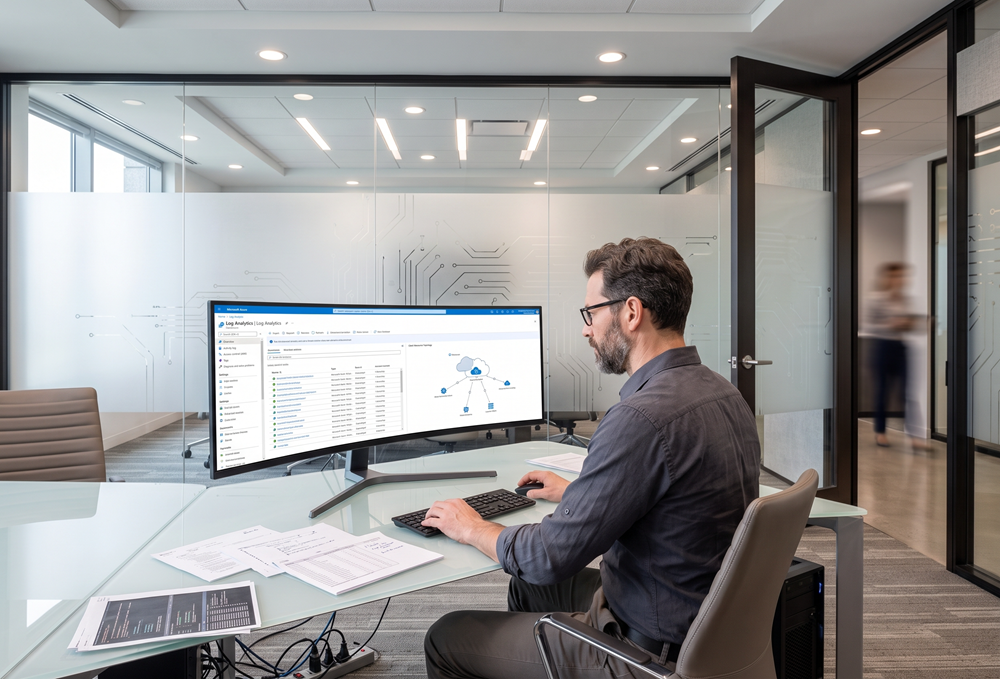
Microsoft Azure Data Factory
Azure Data Factory (ADF) is Microsoft’s cloud-based data integration service. It orchestrates data movement and transformation across cloud and on-premises sources using visual pipelines. It is consumption-based and integrates natively with the broader Azure ecosystem.
What ADF does well: It offers deep integration with Microsoft’s ecosystem (Azure SQL, Power BI, Synapse). It is a visual pipeline designer that’s accessible to less technical users featuring competitive pricing for simple, scheduled data movement tasks.
Where it falls short for mid-market Australia: ADF is a data movement tool, not a data platform. It moves and transforms data, but you still need somewhere to put it, something to query it with, and someone to manage the whole stack.
A complete solution requires ADF plus Azure SQL or Synapse plus Power BI plus security configuration plus compliance management – each billed separately, each requiring expertise to configure. Microsoft has also shifted its development focus to Fabric Data Factory, leaving standalone ADF in maintenance mode.
Verdict: For mid-market businesses, the total implementation cost for a Fabric-based stack runs $125,000 to $345,000 AUD in the first phase alone. And while Azure AU-East has completed an IRAP assessment at the platform level, your application layer, access controls and data handling practices still need their own compliance work.
Snowflake
- Large enterprise data teams
- Pricing Model: Consumption
- Data Engineers Required: 1-3 FTE
- AU Data Residency: Available
- IRAP-aligned Architecture: No
- SOCI Act Compliance Support: No
- US CLOUD Act Exposure: Yes
- Time to Production: Weeks to Months
Databricks
- AI/ML-heavy organisations
- Pricing Model: Consumption
- Data Engineers Required: 2-4 FTE
- AU Data Residency: Available
- IRAP-aligned Architecture: No
- SOCI Act Compliance Support: No
- US CLOUD Act Exposure: Yes
- Time to Production: Months
Azure ADF
- Azure-native data pipelines
- Pricing Model: Consumption
- Data Engineers Required: 1-2 FTE
- AU Data Residency: Available
- IRAP-aligned Architecture: Platform Only
- SOCI Act Compliance Support: No
- US CLOUD Act Exposure: Yes
- Time to Production: Weeks to Months
DataFIT
- AU mid-market (250-1500 staff)
- Pricing Model: Flat Monthly Fee
- Data Engineers Required: None
- AU Data Residency: Default
- IRAP-aligned Architecture: Yes
- SOCI Act Compliance Support: Included
- US CLOUD Act Exposure: Mitigated
- Time to Production: Days
What Our Partners Say

“I’ve been working with Connah at CodeSource on a new client platform for my wills and estate planning business, and the experience has been excellent. Connah listens, turns complex ideas into clear, working prototypes quickly, and is open to feedback along the way. Communication is great and the build has progressed smoothly. Highly recommend CodeSource.“
Jonathan Elcombe
Aditi

“If you are looking for data analytics consulting services in Sydney, Peter and the team at codeSource are well worth speaking to. Peter brings a strong depth of technical knowledge and approaches every project with professionalism and attention to detail. What stands out most is his ability to quickly understand complex requirements and provide clear, practical solutions.“
Maggie Orman
Orman Solicitors
“I’ve had a fantastic experience working with Codesource. Peter Prowse is extremely professional, knowledgeable and responsive. He takes the time to understand requirements properly and delivers with clarity and efficiency. If anyone is looking for reliable remote database management services in Sydney, I would highly recommend speaking with Peter.“
Roshy Sarabhai
Peakstone Finance
One Platform Designed for Australian Businesses
Snowflake, Databricks, and Azure Data Factory are excellent platforms for the organisations they were built for – large enterprises with deep technical teams and big budgets. But the Australian mid-market has been left to choose between tools that are too expensive, too complex or too exposed from a sovereignty perspective.
DataFIT closes that gap. One platform, one monthly price, fully managed, sovereignty-aligned, and designed for businesses that need their data working for them – not the other way around.
Built by codeSource. 30 years of delivering data solutions to Australian business.
Ready to build a digital foundation you completely control?
Frequently asked questions
What is the difference between standard RPA and Agentic Automation?
Standard RPA (Robotic Process Automation) uses “bots” to follow strict, rules-based scripts (like moving data from a spreadsheet into an invoicing system). Agentic automation, a major evolution for 2026, utilises AI to give those bots contextual reasoning. If an invoice format changes, an agentic system can “read” the change, understand the goal, and adapt the workflow automatically without breaking or requiring a human developer to rewrite the script.
Do you handle complex SharePoint migrations?
Yes. Our SharePoint consultants specialise in complex migrations. Whether you are moving from older versions of SharePoint, a chaotic network drive, or a competing cloud platform, we handle the entire SharePoint migration securely, ensuring data integrity, optimised permissions, and zero disruption to your daily operations.
Why should we use the Microsoft Power Platform?
The Microsoft Power Platform is the ultimate tool for rapid, enterprise-grade business improvement. It allows our developers to build custom applications and automated workflows in a fraction of the time it takes to write traditional code. Because it integrates natively with tools you already use (like Teams, Excel, and SharePoint), adoption is incredibly fast.
Is our data secure when using workflow automation?
Absolutely. Security and governance are central to our productivity audits. As a Sydney-based technology collective, we ensure that every workflow automation and custom app we build respects your existing Microsoft 365 data loss prevention (DLP)